
Welcome to Ag Watch, a quarterly update from MorganMyers highlighting the policies, conversations and issues we’re monitoring — and why they matter to agriculture.
As an agency with deep roots and decades of experience in agriculture, we know staying abreast of the issues impacting our audiences is essential to connecting with them.
Here’s what’s on our radar this quarter:
- Soaring diesel prices
- U.S.-China trade uncertainty
- Recovery hints for the crops markets
- Beef policy backlash

Soaring Diesel Prices Put Attention Squarely on Inputs
The war with Iran along with the ongoing Russia/Ukraine conflict pushed the average price of farm diesel to record levels this fall, adding pressure during farmers’ peak harvest use period. Since then, the administration and some states have implemented measures aimed at providing relief. Unfortunately, there is no easy or fast way to restore supplies.
Some lawmakers and ag groups have floated a diesel export ban, but the White House has ruled out that possibility amid concerns about potential trade implications and longer-term market impacts.
The administration’s decision to temporarily lift sanctions on Russian diesel exports could improve the supply outlook. But there’s widespread skepticism about the deal given the ongoing conflict with Ukraine, the possibility of rerouted supplies, questions about the legal basis for the move and bipartisan criticism.
The White House and some states have deferred fuel taxes and lifted restrictions to ease the burden, but those measures provided limited relief. That set the stage for the Oct. 19 announcement of an $8 billion Harvest Fuel Relief program.
Details regarding the payment formula, commodity-specific rates, payment schedule, and more will be spelled out beginning in November. But the one-time payment could provide farmers with additional working capital as harvest expenses come due and financing talks commence. Depending on the timing and amount, the payments may also offer farmers greater flexibility in deciding whether to store crops in hopes of better prices rather than having to sell right out of the field to pay their bills.
But another farm aid payment also raises a broader question the industry is increasingly examining: Do farm aid payments indirectly support higher input prices?
The question extends beyond fuel. Rising costs for everything from seed and equipment to fertilizer and crop protection have centered attention on production costs, industry concentration and competition within the ag input market. They have also fueled calls for greater agriculture antitrust scrutiny, with USDA and the Department of Justice examining competition across fertilizer, seed, fuel, equipment and other ag markets.
Input companies may continue to face increased scrutiny in the near-term, with attention focused on opportunities to bring costs down. We’re monitoring potential anticompetitive findings or legal action, while recognizing that a shift in policy priorities or stronger farm finances could influence that scrutiny.
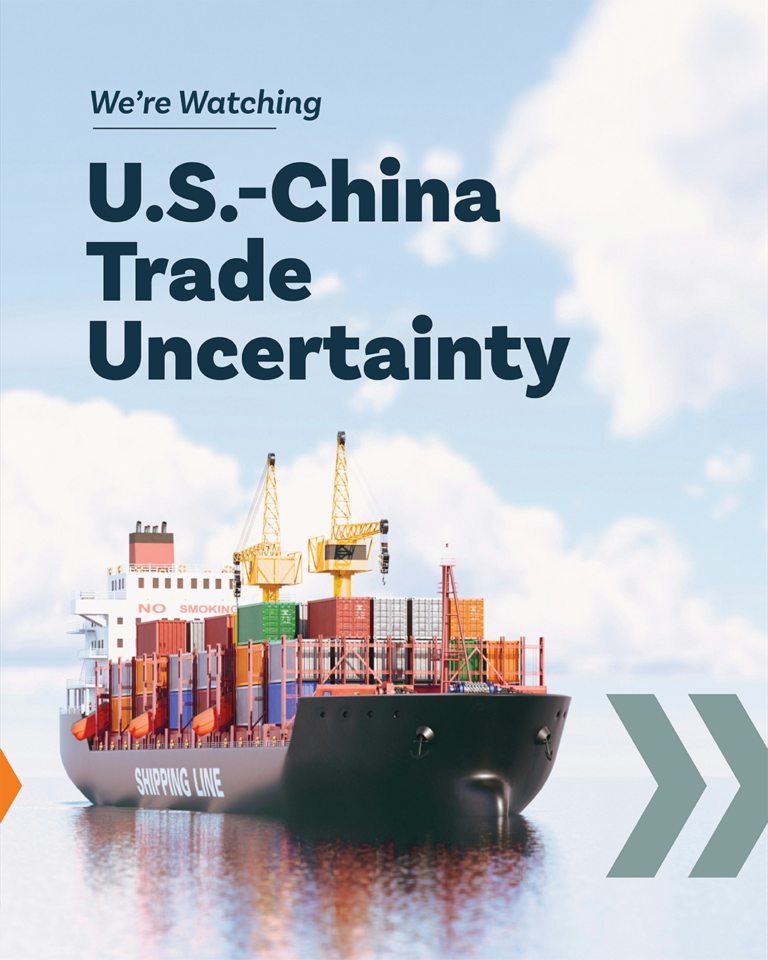
U.S./China Summit Leaves Key Ag Questions Unanswered
Post summit coverage focused on what the late September confab didn’t include: Lower tariffs on U.S. soybeans and details on China’s additional $17 billion in annual ag purchases.
The summit did yield a 30-for-30 Framework under which China will lower tariffs on $30 billion worth of U.S. ag goods, including corn, cotton, beef and pork. But China maintained its 10% retaliatory duty on U.S. soybeans as leverage for future negotiations — a disappointment to soybean producers given that soybeans are the U.S.’s largest ag export to China.
The industry had also hoped for more details on China’s commitment to buy at least $17 billion annually in U.S. ag goods through 2028, beyond its existing U.S. soybean purchase commitments.
The face time between the leaders and 30-for-30 Framework are positive steps, but they didn’t provide the immediate shot in the arm many had hoped for. In the months ahead, we’ll be watching specific tariff rates, effective dates and confirmed export sales — details that will determine how much of the agreement translates into demand for U.S. commodities.
Is the Crop Sector Turning a Corner?
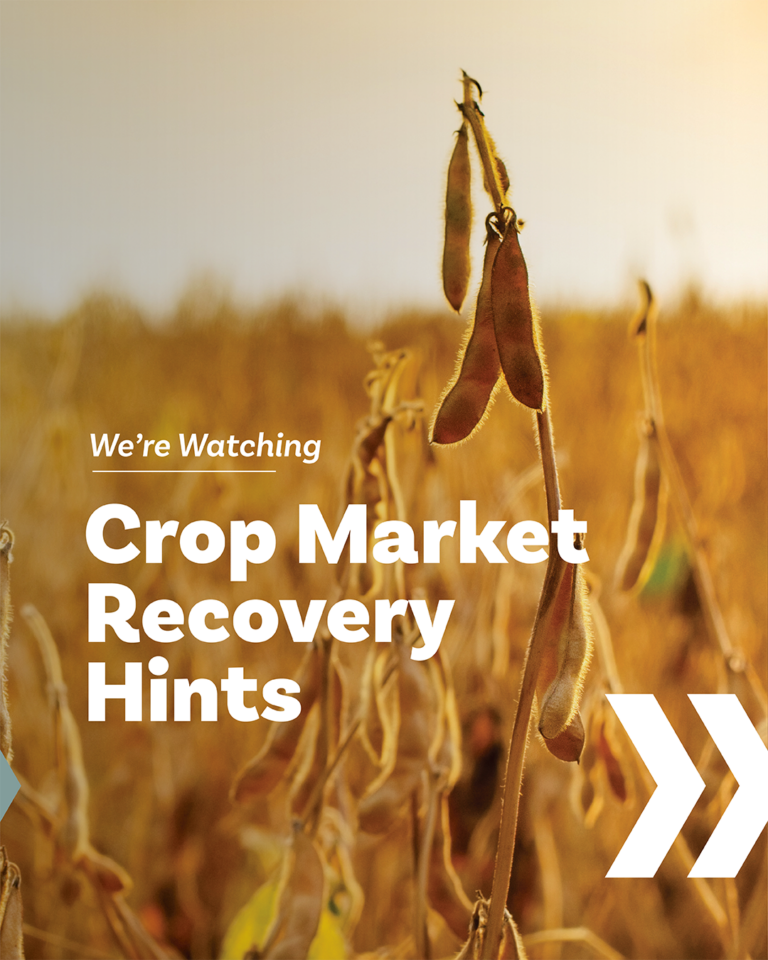
Mexico, the No. 1 buyer of U.S. corn, purchased 2028-29 crop corn in early October, with the value buy adding to signs the U.S. crop sector has put in a price low and may have turned a corner.
That optimism is grounded in some tightening of global stocks and improving demand, which have lifted market prices. But any recovery is expected to be measured and uneven across agriculture, with high input costs, a strong dollar and geopolitical turmoil generating headwinds.
That backdrop, combined with increasing concentration at the farm level, is shifting the focus from productivity to profitability. Farming is increasingly an exercise in efficiency.
Those able to capitalize on efficiency either via scale, specialization or via use of artificial intelligence and precision ag tools may be better positioned to adapt and remain viable. We’ll be watching innovations that deliver concrete ROI to the producer.
Beef Quota Backlash
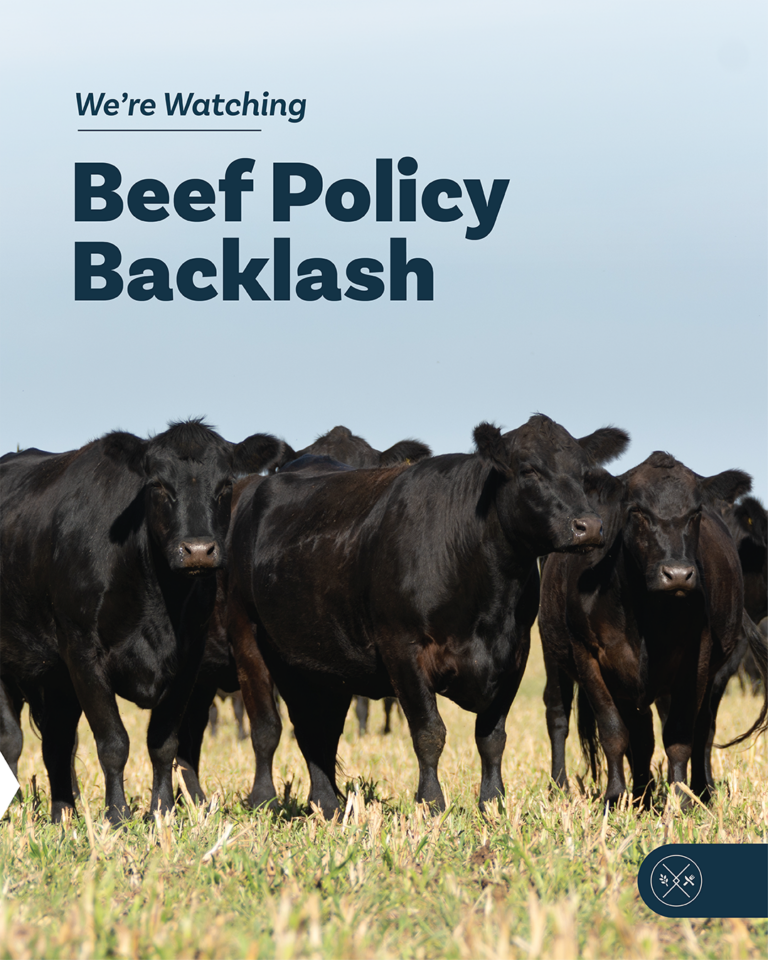
In August, the Trump administration announced it would approve 300,000 MT of tariff-free beef imports with the goal of lowering beef prices for U.S. consumers. Initial analysis suggested the quota would do little to lower costs, a conclusion supported by subsequent data showing negligible impact on lean ground beef prices.
But while the move had little to no effect on beef prices, it had a significant impact on the cattle sector.
Importing lower-priced beef from other countries to compete against U.S. beef can discourage U.S. producers from investing in herd rebuilding. That multiyear effort is what will ultimately increase domestic beef supplies and lower prices.
The timing was also notable. U.S. beef processors are losing money and shuttering processing plants, at a time when consumer demand for protein is strong. Meanwhile, the administration has also rolled out other initiatives intended to encourage herd rebuilding.
The result was a policy that put short-term pressure on cattle prices, added uncertainty and thus discouraged investment in herd rebuilding, and raised concerns about a fundamental misunderstanding of the beef industry and livestock cycles.
We’re watching to see whether the administration shifts its approach on beef policy and if the move has any political ramifications in cattle producing states.
From Insights to Movement
We’re a full-service marketing communications agency that understands the business behind the marketing challenge. From strategy through execution, we bring deep industry knowledge and the right expertise to move your business.
To be added to our Ag Watch email list or talk with us about how we can help you navigate what’s ahead, get in touch.